

Aliens, Presidents, and the Most Controversial ETF Launch Ever
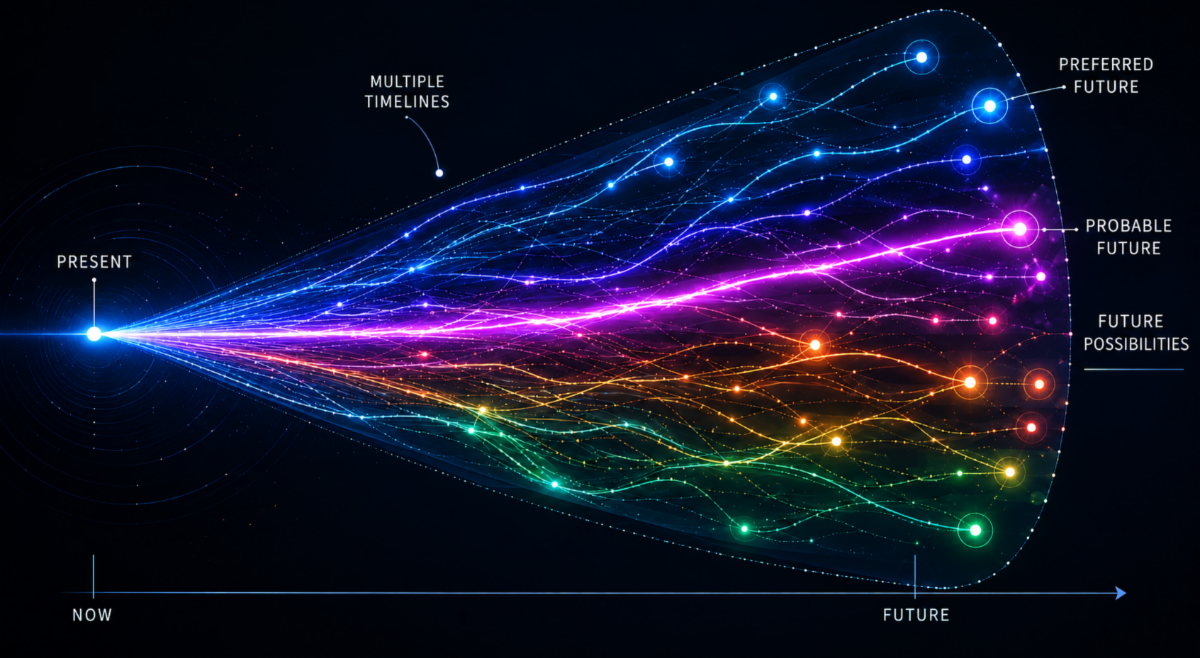
Markets constantly evaluate possible outcomes. The new UFO Disclosure ETF isn’t really a bet on extraterrestrials. It’s optionality for a low-probability, high-impact event.


Aliens, Presidents, and the Most Controversial ETF Launch Ever
It was a strange week.
Last Thursday, President Trump suggested that former President Barack Obama had revealed classified information about alien life during a podcast interview.
“He gave classified information, he’s not supposed to be doing that,” Trump said. “Well, I don’t know if they’re real or not, but I can tell you he gave classified information. He made a big mistake.”

Politics aside, the episode revived a familiar concept: “Disclosure.”
In the context of UFOs, now more commonly referred to as Unidentified Anomalous Phenomena (UAPs), disclosure refers to the comprehensive release of classified government information regarding the existence, origin, and potential technology of these phenomena.
Believers argue that true disclosure would confirm three things:
First, that extraterrestrial visitation is real.
Second, that governments possess recovered craft of unknown origin and have attempted to reverse-engineer them.
Third, that breakthrough technologies derived from these programs could transform energy, transportation, and materials science.
For now, this all remains speculation. But if such revelations were confirmed, the result would be profound. Social scientists refer to this as “ontological shock” — a fundamental reset in humanity’s understanding of its place in the universe.
Markets, of course, don’t wait for philosophical consensus.
Enter Matt Tuttle.
Tuttle is no stranger to controversy. He previously launched the Inverse Cramer ETF, a fund designed to do the exact opposite of Jim Cramer’s public stock recommendations. The move earned headlines and reportedly a lifetime ban from CNBC.
Earlier this month, in a moment of truly inspired timing, Tuttle launched the Tuttle Capital UFO Disclosure ETF (ticker: UFOD).
The idea is straightforward. If disclosure occurs, certain sectors will see a surge in capital, research funding, and strategic focus. UFOD holds approximately three dozen positions concentrated in areas that could benefit, including:
Aerospace and Defense. Companies positioned for UAP analysis, advanced aerospace systems, and potential reverse-engineering initiatives.
Advanced Materials. Firms developing high-performance alloys and next-generation composites that could emerge from breakthrough technologies.
Energy Innovation. Companies focused on alternative fuels and advanced storage systems that would be natural beneficiaries of transformational power technologies.
Here is a downloadable list of fund holdings as of 2/23/26
Tuttle argues that his picks are reasonable choices even if the government didn’t have access to extra-terrestrial technologies, but the strategy would be a “lot more fun” if it did.
As a futurist, I appreciate the second-order thinking. The fund is not betting on aliens. It is structuring optionality around a low-probability, high-impact scenario.
Looking at this from the point of view of a financial analyst, many of the aerospace and defense companies UFOD holds have already made big moves – albeit for entirely different reasons. However, some good deals can be found in large government contractors such as Leidos (LDOS), Science Applications International (SAIC), and Jacobs Solutions (J).
If disclosure ever comes, it is unlikely to arrive in a single dramatic announcement. More realistically, it would unfold gradually and with partial information, bureaucratic opacity, and plenty of noise.
Sometimes the most interesting investment themes begin at the edge of consensus.
Occasionally, they arrive from much farther away.
Copyright ©️ 2026. All Rights Reserved.
About the author

Disclosure
Information contained herein is for educational purposes only and is not to be considered a recommendation to buy or sell any security or investment advice. Securities listed herein are for illustrative purposes only and are not to be considered a recommendation. The author and StratFI clients may hold positions in securities mentioned.
Do you want monthly
Foresight straight to your inbox?
Straightforward commentary, strategic perspectives, and no noise — just one email a month to help you think smarter about your financial future.
Related articles
Explore timely insights and thoughtful perspectives from James Lee and StratFI. Each article is designed to help you cut through the noise, understand the bigger picture, and invest with confidence.
.png)

Straightforward commentary, strategic perspectives, and no noise, just one email a month to help you think smarter about your financial future.